How to Start a Natural Products Brand: A Founder's Roadmap
From first idea to first order, a practical roadmap for launching a natural products brand, covering positioning, formulation, compliance and finding the right manufacturer.
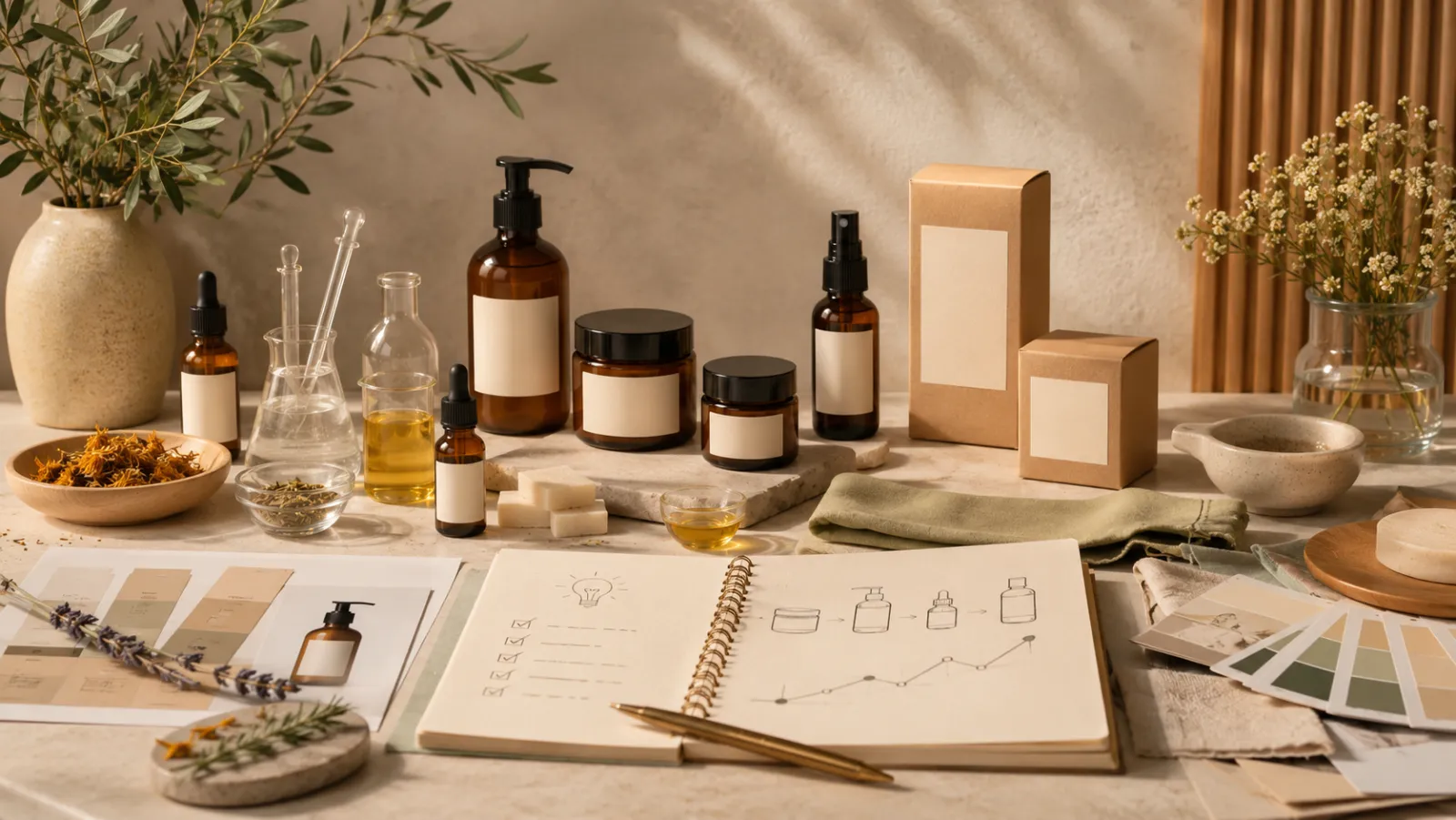
Starting a natural products brand has never been more achievable. The manufacturing, compliance and packaging that once required serious capital are now within reach of a focused founder. What separates brands that launch well from those that stall is rarely budget. It is sequence: doing the right things in the right order. Here is a roadmap that keeps you moving from idea to first order without expensive detours.
Start with a position, not a product
Before you think about formulas or bottles, get clear on who you are for and why you are different. A natural face oil is a product. A face oil built around a single, traceable botanical for sensitive skin, sold to a specific audience, is a brand. The sharper your position, the easier every later decision becomes, from which ingredients to lead with to how you talk about your range.
Decide what you actually want to sell
Resist the urge to launch with a sprawling catalogue. A tight range of two or three products you can describe in a sentence is easier to manufacture, market and reorder than a dozen that dilute your message. Look at where your positioning naturally points: a wellness focus might lead to oils and herbal products, while a ritual focus might lead to soaps, hydrosols and body care. Browsing a manufacturer's product range is a good way to see what is realistic at your scale.
Choose your manufacturing model
This is the decision that shapes your cost and timeline. In short: private label lets you launch quickly with proven formulations under your brand, ODM develops a more distinctive formula from your brief, and OEM produces a formula you already own. Most first-time founders start with private label or ODM. Our guide to OEM, ODM and private label walks through the trade-offs in detail.
Get your formula and samples right
Whichever model you choose, do not skip the sample stage. Hold the product, smell it, use it for a week. Check that the texture, scent and finish match the experience you are promising customers. If something is not right, this is the moment to refine it, before you commit to a production run. A manufacturer that welcomes sample feedback is a manufacturer worth keeping.
Plan for the markets you want to sell in
Where you sell determines the documentation you need. Selling into Europe, the Gulf or North America each carries its own requirements, and getting this wrong after production is costly. The good news is that a capable manufacturer prepares this paperwork as part of the service. It is worth confirming early that the facility holds the certifications your buyers and retailers will ask for, such as GMP and Halal.
Sort packaging early
Packaging is where many launches get stuck. Custom bottles and jars carry their own high minimums and long lead times, and they can quietly multiply your real starting quantity. For a first range, ready-to-use stock packaging keeps your minimum low and your timeline short. You can always invest in custom packaging once the product is proven.
Place your first order
Your first production run should be large enough to sell credibly and small enough that you are not sitting on stock you cannot move. This is where minimum order quantity matters, and where the difference between a real and a headline minimum becomes very real money. Our guide to cosmetics MOQ explains how to start small without overcommitting.
A simple sequence to follow
- Define your position and audience: know who you are for before anything else.
- Choose a tight starter range: two or three products you can explain in a sentence.
- Pick a manufacturing model: private label or ODM for most first launches.
- Approve samples: never commit to production on a formula you have not tested yourself.
- Confirm compliance and packaging: match both to your target markets before you print or produce.
- Place a right-sized first order: enough to sell, not so much that you are stuck with stock.
You do not have to navigate this alone. If you have an idea and want a partner who can take it from brief to finished product, tell us what you are planning and we will help you map the path.